
Content

Data is one of your business’s most valuable assets, but managing and securing it can be a challenge, especially as the volume of data grows. Without the right systems in place, your data can become a liability instead of a resource. That’s where enterprise data governance comes in.
For business leaders and executives, understanding how to implement a solid data governance strategy is crucial. Not only does it help with protecting sensitive data, but it also ensures your company stays compliant with ever-changing regulations. With the right framework, you can safeguard your data assets and make sure they’re used efficiently across the organization.
In this article, we’ll break down how to secure your data with enterprise data governance. You’ll learn about key components, best practices, and the tools you need to manage data effectively and reduce risks.
What Is Enterprise Data Governance?
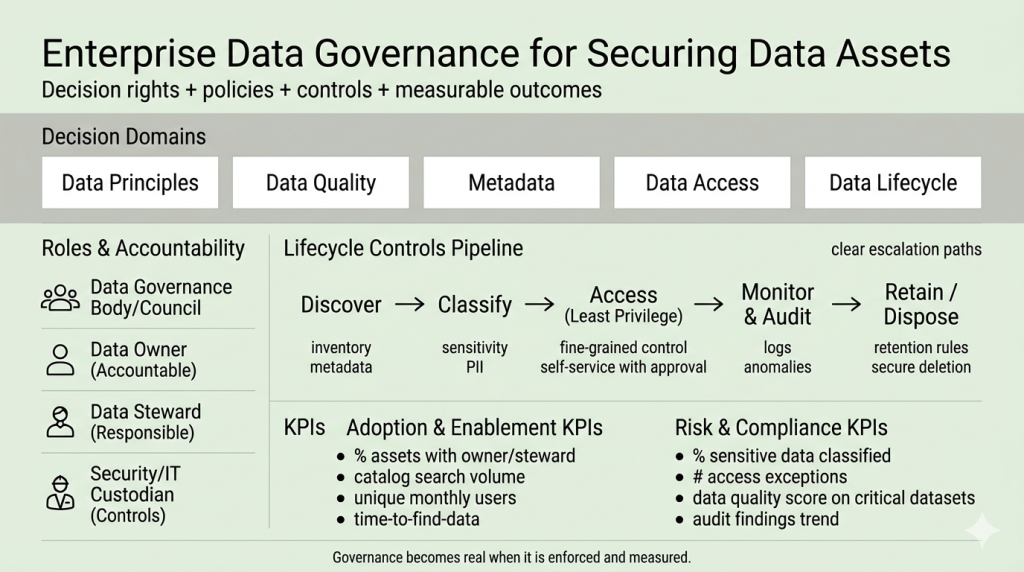
Enterprise data governance is the process of managing the availability, usability, integrity, and security of data in an organization. As businesses grow and rely more on data to drive decisions, it becomes critical to ensure that data is accurate, accessible, and protected. This goes beyond just compliance with regulations – it’s about setting up a framework that ensures data can be trusted and leveraged effectively.
At its core, data governance involves several important elements:
- Data Quality: This refers to ensuring that the data your organization relies on is accurate, complete, and consistent across all departments. Poor data quality leads to inaccurate insights, which can significantly impact business decisions.
- Data Security: Securing data from breaches and unauthorized access is a top priority. This includes implementing access controls, encryption, and other security measures to protect sensitive data.
- Compliance: With data privacy regulations like GDPR and HIPAA becoming more stringent, ensuring compliance is crucial. Enterprise data governance helps businesses stay compliant with industry standards and legal requirements, reducing the risk of fines and reputational damage.
- Data Access: Data governance defines who in the organization has access to which data. This ensures that only the right people can use sensitive information, reducing the risk of misuse.
Need Help with Enterprise Data Governance?
Our team of experts can help you implement effective data governance strategies to secure and manage your valuable data assets. From compliance to data quality and security, we offer tailored solutions that align with your business needs.
Let us help you establish a solid data governance framework for long-term success.

Let us help you establish a solid data governance framework for long-term success.
Why Is Enterprise Data Governance Important?
Enterprise data governance plays a critical role in the modern business environment. With data volumes growing exponentially, the risk of poor data management can lead to serious consequences, including non-compliance with regulations, data breaches, and ineffective decision-making. For business leaders, establishing a robust data governance strategy is essential not just for security, but for maximizing the value of their data.
1. Protecting Sensitive Information
One of the primary reasons data governance is essential is data protection. Sensitive business data, such as customer details, financial records, and intellectual property, must be carefully guarded against threats like cyberattacks, leaks, and unauthorized access. Without a governance framework in place, businesses are vulnerable to costly breaches that can damage reputation and lead to fines.
2. Ensuring Regulatory Compliance
With stricter data privacy laws like the GDPR, HIPAA, and CCPA, companies must be more proactive about compliance. Data governance ensures that an organization meets these regulatory standards by enforcing data handling practices that protect customer privacy and adhere to legal requirements. Failing to do so can result in severe penalties and loss of consumer trust.
3. Improving Data Quality and Decision-Making
Effective data governance isn’t just about security and compliance—it also improves data quality. When your data is well-organized and standardized, it provides a reliable foundation for decision-making. Leaders can rely on accurate and timely data to drive business strategies, identify growth opportunities, and address challenges more effectively.
4. Reducing Risks and Costs
By implementing data governance policies, businesses can minimize the risk of poor data quality and security incidents. Well-governed data leads to reduced operational risks, fewer compliance issues, and less costly mistakes, ultimately improving the bottom line. Furthermore, data governance helps streamline operations by ensuring data consistency across departments and systems.
Our Data Consulting Services You Might Find Interesting

Data Warehouse Consulting Services
We design, build, and modernize data warehouses that bring order to your fragmented data.

Modern Data Architecture Services
We design and implement data architectures that replace aging legacy systems with a scalable cloud foundation.

Data Governance Consulting & Integration
We help you build a practical system of trust around your information. We work with you to make sure your data is accurate.
Best Practices for Implementing Enterprise Data Governance
Implementing a strong enterprise data governance framework is key to ensuring the security, quality, and compliance of your business’s data. While there are many strategies for data governance, it’s important to identify the best practices that work for your specific business needs. Below is a comparison of the most effective data governance practices that will help you manage and secure your data.
| Best Practice | Description | Benefits |
|---|---|---|
| Define Ownership & Accountability | Assign clear roles and responsibilities for managing data within the organization, including data stewards and managers. | Ensures data is actively managed, improving quality, security, and accessibility. |
| Develop a Data Governance Framework | Create a structured framework that outlines policies, procedures, and guidelines for how data is handled across all departments. | Provides a clear roadmap for managing data, improving consistency and reducing errors. |
| Leverage Technology & Automation | Use data governance software (e.g., Power BI) to automate tasks like data classification, access management, and compliance tracking. | Increases efficiency, reduces manual effort, and provides real-time insights into data health. |
| Prioritize Data Quality Management | Implement tools and processes to ensure data is accurate, complete, and consistent. Regularly cleanse and validate data. | Enhances decision-making by providing reliable data and reduces errors caused by poor data quality. |
| Foster a Data-Driven Culture | Promote the importance of data governance throughout the organization by educating employees and fostering cross-department collaboration. | Encourages responsible data use and ensures data governance is a shared responsibility across teams. |
| Continuously Monitor & Adapt | Regularly review and adapt data governance policies to address changes in regulations and business growth. | Ensures that data governance remains effective as your business and the regulatory environment evolve. |
Effective data governance requires more than just technology; it demands careful planning, ownership, and a commitment to ongoing improvement. The practices outlined above offer a solid foundation for implementing a governance framework that aligns with your business goals. As data management needs evolve, businesses must remain agile, continuously optimizing their governance strategies to stay secure, compliant, and competitive.
Conclusion: Securing Your Data Assets with Enterprise Data Governance
In an era where data is the lifeblood of businesses, securing and managing your data effectively is not just a necessity – it’s a strategic advantage. Enterprise data governance ensures that data remains accurate, secure, and compliant with regulations while empowering decision-makers with reliable insights.
A well-defined data governance strategy provides multiple benefits, including better data quality, enhanced security, and compliance with privacy laws. By implementing best practices such as clear ownership, leveraging technology, and fostering a data-driven culture, businesses can reduce risks, streamline operations, and unlock the full potential of their data.
At Multishoring, we specialize in data governance solutions tailored to meet the unique needs of your business. Beyond governance, we also offer powerful tools like dashboards in Power BI to help you make sense of your data, visualize trends, and drive informed decision-making.
Remember, data governance isn’t a one-time effort – it’s an ongoing process that adapts as your business grows and regulations evolve. Contact us today to secure your data assets and position your business for long-term success.


